
Sleep, stories and small bedtime victories
Practical advice and research explained for gentler bedtimes — from the team that invents stories for your children.
 Stories
Your Child's Name in the Story: Marketing Gimmick or Real Lever?
From five months old, a baby's brain responds differently to their own name. When the story's hero shares the child's name, attention, engagement and even learning change. Here is what research says about personalisation.
Read the article Learning
Audio Stories: What Happens Inside a Child's Mind While Listening?
With no pictures to look at, a child's brain makes its own. Neuroscience shows that listening to stories intensely activates the imagination networks — far more than screens do. A journey inside young listeners' minds.
Read the article Screens
Screens Before Bed: Why They Delay Sleep, and What to Replace Them With
A tablet or cartoon before sleep: nearly all studies point to delayed, shortened, lower-quality sleep. Here is what happens — and the alternative that genuinely calms children down.
Read the article Learning
Stories and Language Development: a Million-Word Head Start
A child who hears stories every day will have heard over a million more words than a child who never does by the time they start school. Here is why that changes everything.
Read the article Sleep
SleepHelping Your Child Fall Asleep Faster: the Bedtime Routine That Works
Thirty, forty-five, sometimes sixty minutes to fall asleep? Sleep research is clear: a consistent bedtime routine can turn that nightly marathon into a few-minute ritual. Here is how.
Read the article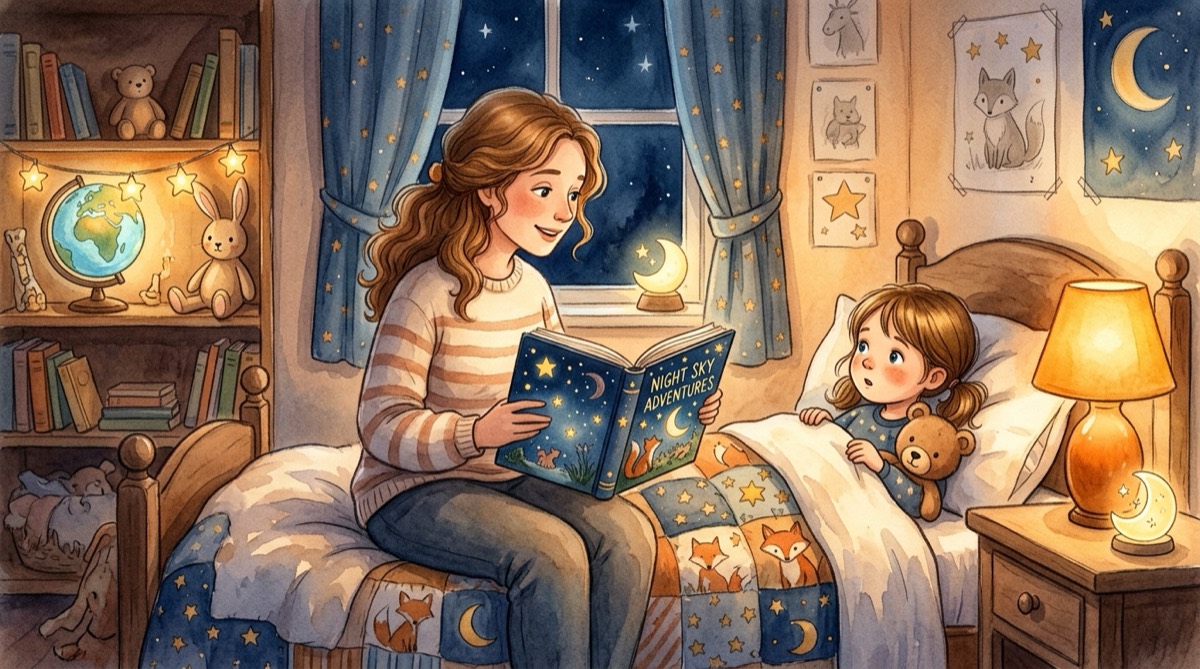 Sleep
SleepThe Benefits of Bedtime Stories: What Science Actually Says
Calmer sleep, richer vocabulary, a stronger parent-child bond: the bedtime story is one of the most well-documented rituals in child research. Here is what the evidence shows.
Read the article